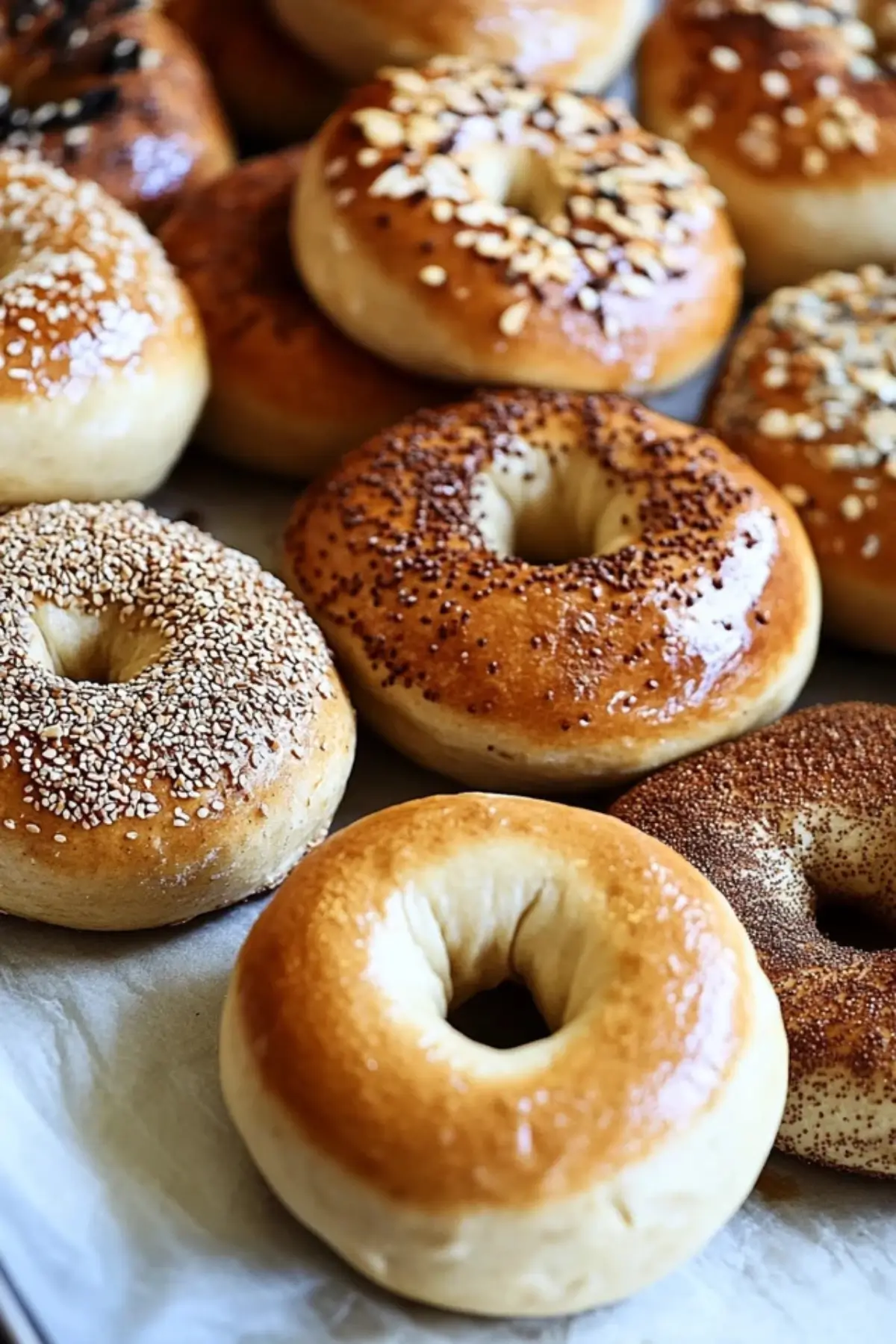
There’s something magical about biting into a homemade bagel, especially when it’s crafted with the tangy love of sourdough. I still remember the first time I pulled a batch of sourdough bagels out of my oven. I had been baking sourdough bread for months, feeling confident but admittedly stuck in a rut.
One day, driven by curiosity and a craving for a classic New York-style chew, I decided to try bagels. That first golden, glossy batch was a game changer. The process was surprisingly easy, the results so satisfying, I knew I’d never go back to store-bought again. If you’re new to baking, this easy recipe for The Best Sourdough Bagels is a perfect start: it’s simple, time-efficient, and leads to a healthier, more digestible treat thanks to the magic of natural fermentation.
Why This Recipe is Special
Sourdough bagels stand out for their unbeatable chew, soft interiors, and deep, rich flavor. Unlike commercial versions, these bagels rely on an active sourdough starter instead of packaged yeast, creating a more digestible and nutrient-dense product. Plus, the method is designed with beginners in mind: a hands-off overnight rise and a straightforward shaping technique make these bagels both forgiving and foolproof. Whether you want a classic plain bagel, a sesame-studded beauty, or a cheesy masterpiece, this recipe offers endless versatility.
Ingredients and Preparation
Active Sourdough Starter: Acts as the natural leaven, giving the bagels their rise, tangy flavor, and enhanced nutrition.
Warm Water: Helps to activate the starter and makes the dough easier to mix.
Bread Flour: Provides the high protein needed for a strong, chewy structure. While all-purpose flour can work in a pinch, bread flour is ideal.
Sugar: Adds a slight sweetness that balances the tang of the sourdough. Alternative options include cane sugar or coconut sugar.
Salt: Enhances overall flavor and strengthens the dough structure. Unrefined sea salt is recommended for added minerals.
Honey (for boiling water): Helps create the shiny, chewy crust when the bagels are boiled. You can swap honey for brown sugar or maple syrup if needed.
Alternative Suggestions:
- Flour: Try half bread flour and half whole wheat for a heartier version.
- Sweetener: Maple syrup or coconut sugar can add unique undertones.
- Toppings: Experiment with everything bagel seasoning, shredded cheese, poppy seeds, or cinnamon sugar.
Step-by-Step Instructions
Step 1: In a large mixing bowl, combine your active sourdough starter, warm water, and sugar, stirring until it resembles a milky liquid. Add the bread flour and salt, then mix thoroughly by hand until a rough dough forms.
Step 2: Knead the dough directly in the bowl using a stretch-and-fold method for about 5–6 minutes. The dough will feel stiff and slightly bumpy, which is completely normal for bagel dough.
Step 3: Cover the bowl with plastic wrap or a reusable shower cap and let it rest for one hour at room temperature.
Step 4: After the initial rest, knead the dough again for about 30 seconds to strengthen the gluten structure, then cover and leave it to bulk ferment overnight (8–12 hours) until doubled in size.
Step 5: In the morning, gently turn the dough out onto a clean surface (no need for flour) and shape it into a rectangle about half an inch thick. Cut into 8 roughly equal pieces.
Step 6: Shape each piece into a ball by tucking the edges underneath, then poke your thumb through the center and stretch the dough to create a 2-inch hole. Cover shaped bagels with a damp cloth and let them rest for 20–60 minutes until puffed.
Step 7: While the bagels are resting, preheat your oven to 425°F and bring a large pot of water with honey to a boil.
Step 8: Once puffed, boil 2–3 bagels at a time for 30 seconds per side, using a slotted spoon to transfer them to a cooling rack or towel.
Step 9: Dip the tops of your boiled bagels into your chosen toppings while they’re still sticky.
Step 10: Bake the bagels for 20–25 minutes until golden brown. Cool on a wire rack before slicing and enjoying.

Beginner Tips and Notes
- If the dough feels too stiff to knead easily, let it rest for 10 minutes, then continue kneading.
- If your bagels deflate after boiling, it could be from over-proofing; next time shorten the second rise.
- Use a kitchen scale for cutting the dough into even pieces to ensure even baking.
- If you don’t have a slotted spoon, a wide spatula can work in a pinch.
Serving Suggestions
Pair your sourdough bagels with a generous spread of cream cheese, fresh butter, or your favorite nut butter. For a hearty breakfast, load them up with eggs, avocado, and bacon.
These bagels also make excellent burger buns or a nostalgic nod to “bagel bites” by topping with marinara sauce and mozzarella before baking.
Store leftovers in a sealed plastic bag at room temperature for up to 3 days, or freeze them sliced or whole for up to 3 months. Reheat by microwaving for 10 seconds and toasting to revive that fresh-out-of-the-oven taste.
Conclusion
There’s a special satisfaction in mastering your own homemade sourdough bagels, especially when they’re this easy, chewy, and delicious. I hope you feel excited and empowered to dive into this recipe and make it your own. Try it out, get creative with toppings, and let me know how your baking adventure goes in the comments. I can’t wait to hear all about your easy sheet pan dinner experiments, lemon herb chicken recipe pairings, and your quick and healthy meals featuring these fantastic bagels!
FAQ About The Best Sourdough Bagels
1. Do I need a sourdough starter to make these bagels?
Yes, an active and bubbly sourdough starter is essential for this recipe. It provides the natural fermentation that gives the bagels their signature flavor and texture.
2. Can I use all-purpose flour instead of bread flour?
You can use all-purpose flour, but bread flour is highly recommended for achieving that classic chewy texture, thanks to its higher protein content.
3. Why do I need to boil the bagels before baking?
Boiling the bagels sets the crust and gives them their characteristic chewiness. It also helps the toppings stick better and enhances the final golden color.
More Relevant Recipes
Print
The Best Sourdough Bagels
- Total Time: 9–13 hours
- Yield: 8 bagels 1x
- Diet: Vegetarian
Description
Learn how to make soft, chewy sourdough bagels at home with this easy and beginner-friendly recipe, perfect for quick, healthy meals and endless topping options.
Ingredients
- 150g active, bubbly sourdough starter
- 250g warm water
- 500g bread flour
- 40g sugar
- 11g salt
- 20g honey (for boiling water)
Instructions
- In a large bowl, mix the active starter, warm water, and sugar until it looks like a milky liquid. Add the bread flour and salt and mix until fully incorporated.
- Knead the dough in the bowl for 5-6 minutes using a stretch-and-fold technique until the dough is stiff and slightly bumpy.
- Cover the dough and let it rest for 1 hour at room temperature.
- After resting, knead the dough again for 30 seconds, then cover and allow it to ferment overnight (8–12 hours) until doubled in size.
- Turn the dough onto a clean surface and shape it into a rectangle. Cut into 8 equal pieces and form each piece into a smooth ball.
- Poke a hole in the center of each ball and stretch to form a bagel shape. Cover with a damp cloth and let them rise until puffed, about 20–60 minutes.
- Preheat the oven to 425°F. Bring a large pot of water with honey to a boil.
- Boil 2–3 bagels at a time for 30 seconds per side, then transfer them to a rack.
- Dip the tops of the boiled bagels into your choice of toppings while they are still sticky.
- Place the bagels on a baking sheet and bake for 20–25 minutes until golden brown. Cool on a wire rack before serving.
Notes
- Use bread flour for best chewy texture; all-purpose flour can work but yields a softer bagel.
- Keep the dough slightly stiff; it should not feel overly sticky.
- Monitor the second rise carefully to avoid over-proofing the bagels.
- If you top with cheese, also dip the bottom for extra crunch.
- Bagels freeze well; slice before freezing for easy toasting later.
- Prep Time: 20 minutes (active), plus 8–12 hours fermentation
- Cook Time: 25 minutes
- Category: Breakfast
- Method: Baking
- Cuisine: American
Nutrition
- Serving Size: 1 bagel
- Calories: Approximately 220
- Sugar: 4g
- Sodium: 400mg
- Fat: 1g
- Saturated Fat: 0g
- Unsaturated Fat: 1g
- Trans Fat: 0g
- Carbohydrates: 45g
- Fiber: 2g
- Protein: 8g
- Cholesterol: 0mg