Rhubarb has always been the perfume of spring in my kitchen — that tart, green-tinged scent that makes the whole house feel like a memory. My grandmother kept a pot of butter on the stove and a jar of sugar in the pantry, and when rhubarb came into season she would hum while she chopped the stalks. This warm rhubarb cake with butter sauce is the recipe I reached for when I wanted that same afternoon glow in my own home.
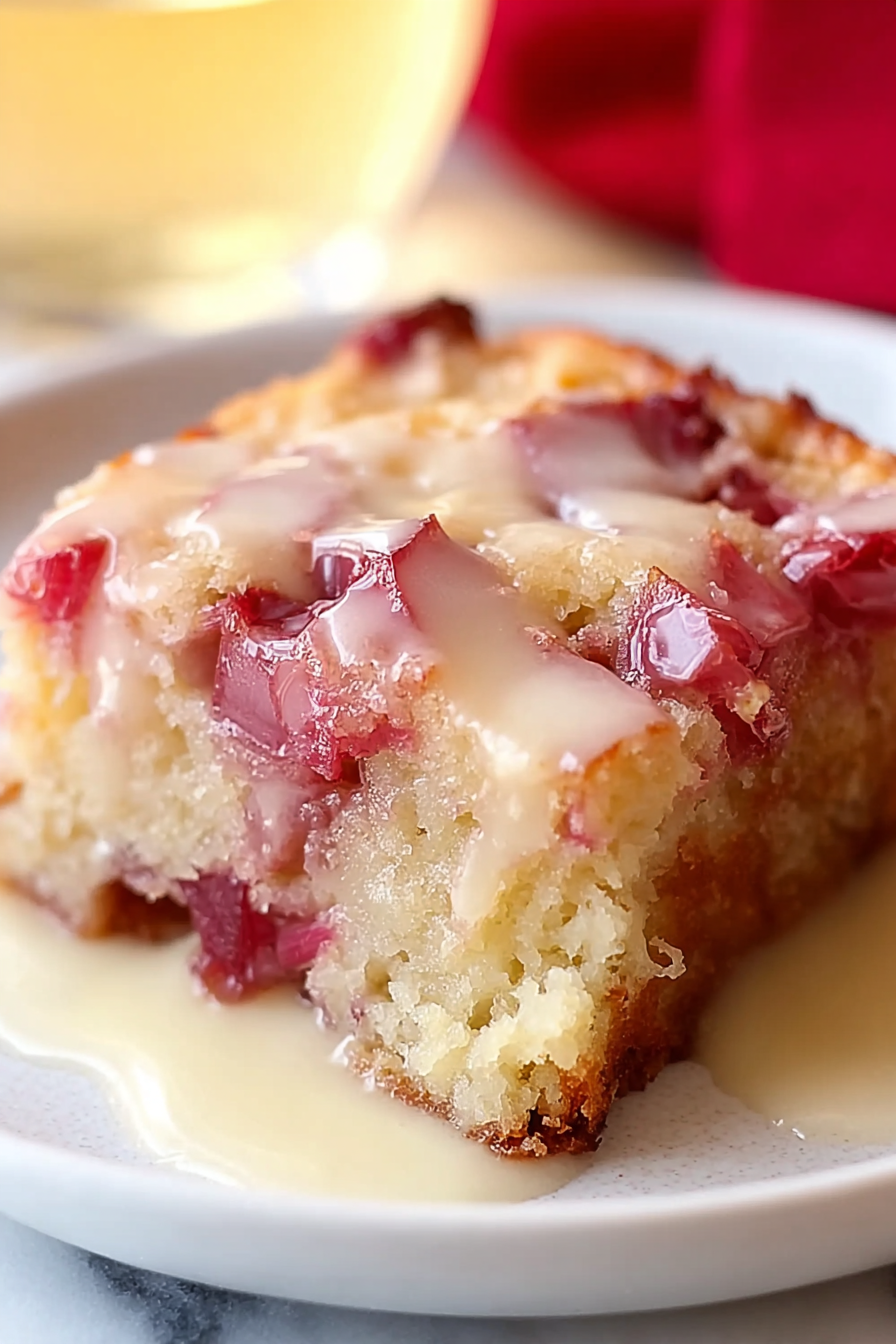
When this cake bakes, the house fills with buttery steam and a bright, tangy note from the rhubarb — it always takes me back to that worn wooden countertop and the sound of my grandmother’s wooden spoon against a mixing bowl. I like to think of this cake as the same honest comfort she served: straightforward, slightly rustic, and endlessly forgiving.
I’ll walk you through the little tricks I learned from her so your cake comes out tender, with a saucy, comforting finish. There’s room here for improvisation — swaps for diet needs, warming spices, even different fruit pairings — but the heart of it should smell like butter and spring.
What You’ll Need for Warm Rhubarb Cake with Butter Sauce
Below I talk through the ingredients conversationally so you understand their roles and how to swap things if you need to. I won’t list exact amounts here — those live in the recipe card handled separately — but these notes will help you make smart substitutions and avoid common mistakes.
- Rhubarb – The star: choose firm, brightly colored stalks when fresh. If you use frozen, thaw and drain well so you don’t add excess liquid.
- All-purpose flour – Gives structure. Measure carefully (fluff, spoon, level) because too much will make the cake heavy.
- Sugar – Balances rhubarb’s tartness and helps the crust caramelize in the butter sauce.
- Baking powder – The leavening agent that provides lift and a tender crumb when used correctly.
- Milk – Adds moisture and helps dissolve sugar; swap in a non-dairy milk if you prefer.
- Butter (for cake and sauce) – Flavor and richness come from butter; for a vegan option, use a firm plant-based butter alternative in both the cake and the sauce.
- Whipping cream (for sauce) – Makes the butter sauce silky; for a dairy-free version use full-fat coconut milk or a thick oat cream.
- Thickening agent (cornstarch or a bit of flour) – Helps keep the rhubarb layer from becoming too wet during baking.
How to Prepare Warm Rhubarb Cake with Butter Sauce
These steps will guide you through the process with an emphasis on confidence and gentle technique. Use a single bowl if you like an easy, homey method, and keep an eye on texture rather than timing alone.
- Bring any refrigerated ingredients like butter and milk to room temperature first so they blend smoothly and the batter develops evenly.
- Prepare the rhubarb: trim, chop into uniform pieces, and toss with a small amount of sugar and a dusting of cornstarch or flour to bind excess juice.
- Combine dry ingredients in one bowl and wet ingredients in another; then fold the wet into the dry just until no streaks remain — a few small lumps are okay.
- Gently fold the rhubarb into the batter so it’s evenly distributed; avoid vigorous stirring that will break up the fruit and release extra liquid.
- Pour into a prepared pan and bake until the cake is set at the edges and a toothpick comes out mostly clean from the center with a few moist crumbs.
- Make the butter sauce while the cake rests slightly: melt butter, stir in sugar until glossy, then whisk in cream off the heat until the sauce is smooth and pourable.
- Serve the cake warm with the sauce spooned over each slice so the sauce soaks into the crumb without making it soggy.
Pro-Tips
- I like to let the batter rest for a few minutes before baking — it gives the leavening a chance to start reacting and yields a better rise.
- I often dry the rhubarb briefly on paper towels after tossing with sugar and starch; this extra step cuts down on stray moisture.
- Use a pan with light-colored sides for more even baking; dark pans tend to brown edges too quickly.
Preventing a Soggy Rhubarb Layer
Keeping the rhubarb juicy but not wet is the trickiest part. These methods preserve a pleasantly saucy top without making the cake mushy.
- Pre-cook a portion of the rhubarb over low heat just until it releases some juice, then let it cool and fold into the batter to reduce in-bake moisture.
- Toss raw rhubarb with a small amount of cornstarch or flour; the starch will absorb excess juices during baking and thicken the layer.
- Drain thawed frozen rhubarb thoroughly and press gently in a sieve or paper towels to remove extra water.
- Bake at a steady temperature so the liquid has time to evaporate rather than pool; if the top looks too wet near the end of baking, give it a few extra minutes at a slightly lower temperature.
For insights into using rhubarb in baking, check out our Moist Rhubarb Bread to see how to keep your recipes perfectly textured.
Keeping the Cake Tender Without Overmixing
The goal is a tender crumb, not a uniform batter. Overworking flour makes gluten and yields toughness — here’s how to avoid it.
- Understand that flour develops gluten when it’s mixed with liquid and agitated; minimize stirring once the wet and dry components meet.
- Mix just until the batter holds together and you can’t see dry streaks — usually a dozen gentle folds rather than long mixing.
- Use a rubber spatula to fold in ingredients; scraping the bottom and folding over is kinder to the batter’s structure than beating.
- If you add extras like nuts or oats, fold them in at the end with only a couple of turns to maintain lightness.
Troubleshooting
- I’ve had cakes sink when I opened the oven too early — resist peeking during the first two-thirds of the bake so the structure can set.
- I once had a runny top when my rhubarb was especially juicy; draining and a touch more starch fixed it the next time.
- If your edges brown too fast, tent the pan with foil and continue baking until the center is done; I’ve relied on this on old, finicky ovens.
- When a cake is dry, it usually means too much flour or overbaking — check your measuring technique and the doneness test next time.
Timing and Temperature for an Even Bake
Ovens vary, so think of times and temperatures as guides. These tips will help your cake brown evenly and finish with the right texture.
- Preheat your oven fully before you begin so the cake starts baking immediately and evenly.
- Use an oven thermometer to confirm true internal temperature — many ovens run hot or cool by several degrees.
- Place the pan on the center rack to allow even air circulation; avoid placing it too close to the top or bottom walls.
- Test for doneness with a toothpick: it should come out with a few moist crumbs from the center, not completely wet batter.
How to Store Your Warm Rhubarb Cake
Proper storage keeps the cake moist and the butter sauce silky for later enjoyment.
- Cool the cake completely before covering to avoid trapping steam and creating sogginess; store in an airtight container in the refrigerator for a few days.
- For longer storage, wrap individual slices tightly in plastic and freeze; thaw in the fridge overnight and reheat gently.
- Reheat slices in a low oven or a hot pan to refresh the crust and warm the interior; spoon warm butter sauce over after reheating.
Learn the best practices for keeping your treats fresh by reading our guide on How to Store Your Baked Goods.
Rhubarb Cake Variations: Spices, Fruit Swaps and Dietary Alternatives
There are so many small changes that make this cake feel new while keeping its nostalgic core. Below are easy variations to try — each is written as a quick idea so you can pick what fits your pantry and preferences.
- Ginger or cinnamon – Add a warm spice to the batter to complement the rhubarb’s tartness.
- Strawberry-rhubarb – Mix chopped strawberries with rhubarb for a sweeter, jammy top; for a related inspiration, try a simple version like this Strawberry Rhubarb Coffee Cake.
- Apple or pear swap – Use diced, firm apples or pears if rhubarb is out of season; adjust sugar slightly to balance tartness.
- Gluten-free – Substitute a 1:1 gluten-free baking flour and be gentle with mixing to maintain tenderness.
- Vegan – Use plant-based butter and a non-dairy milk plus a thickening cream alternative for the sauce; a flax or chia egg can replace eggs if the recipe calls for them.
- Quick version – If you’re short on time, layer fruit over a simple batter and bake; for another easy idea, consider a Rhubarb Dump Cake twist like this Rhubarb Dump Cake.
Serving Suggestions and Pairings
How you serve the cake can turn a simple slice into a memorable dessert moment. Think contrasts in temperature and texture.
- Serve warm with a scoop of vanilla ice cream so the cold cream meets the warm butter sauce.
- A dollop of lightly sweetened whipped cream or crème fraîche balances the tart rhubarb.
- Pair with a mild black tea or a chamomile for a gentle complement to the cake’s richness.
- Finish with a dusting of powdered sugar or a thin vanilla glaze for a pretty, simple touch.
Readers’ Stories and Family Memories
I treasure the old stories that come with recipes — they’re the reason I keep baking this cake each spring. If you have a memory tied to rhubarb, a grandmother’s kitchen, or a first-time baking triumph, I’d love to hear it. Share a short note about when you first tasted rhubarb or how your family serves it; these small remembrances are what keep recipes alive from one kitchen to the next.
Frequently Asked Questions
Can I use frozen rhubarb for this recipe?
Yes! You can definitely use frozen rhubarb. Just make sure to thaw and drain any excess moisture before adding it to the cake.
What can I substitute for milk in this recipe?
You can use any non-dairy milk, like almond, soy, or oat milk, as a substitute for cow’s milk in this recipe.
How do I prevent the cake from becoming soggy?
To prevent a soggy rhubarb layer, be sure to properly drain any excess liquid from the rhubarb and avoid overmixing the batter.
What’s the best way to store leftover cake?
Store leftover cake in an airtight container in the fridge for up to 3 days, or you can freeze it for longer storage. Just wrap it tightly in plastic wrap before freezing.
Can I add spices or other fruits to this recipe?
Absolutely! Feel free to get creative by adding spices like cinnamon or nutmeg, or even mixing in other fruits like berries for a delicious twist.